

An OPRA™ Implant System patient standing in natural landscape.

How OPRA™ works

The OPRA™ Implant System connects a prosthetic limb directly to the bone using a titanium implant. 

How OPRA™ works

Direct connection

The OPRA™ Implant System connects a prosthetic limb directly to the bone using a titanium implant. This approach, called osseointegration, allows the prosthesis to attach through a skin penetration device called an Abutment, eliminating the need for a traditional socket. 

This direct connection can help improve stability, comfort, and control for patients who have difficulty using socket prostheses. 

The process includes surgery, recovery, and a structured rehabilitation program to help patients gradually begin using their prosthetic limb. 

Socket challenges

For amputees, socket prostheses have long been the standard solution for restoring mobility and supporting everyday activities. However, sockets rely on soft tissue for attachment to the body, which can result in improper alignment, discomfort, skin irritation, and an inadequate fit. These limitations make everyday life more challenging and can reduce confidence in daily activities. 

The following conditions may increase the risk of limited mobility, instability, and difficulry achieving a comfortable, reliable fit:  
• Shorter residual limbs 
• Skin sensitivities 
• Excessive scarring  
• Volume fluctuations 
• Heterotopic ossification
The Science

Osseointegration

Osseointegration limb replacement is a method for anchoring the prosthesis directly to the bone. In the early 1960s, Swedish Professor Per-Ingvar Brånemark discovered that titanium is not rejected by the body but instead integrates with the surrounding bone tissue. Professor Brånemark named his discovery from the Latin word os – which means bone, and integrare – which means make whole, which can also be expressed as interactive coexistence. 

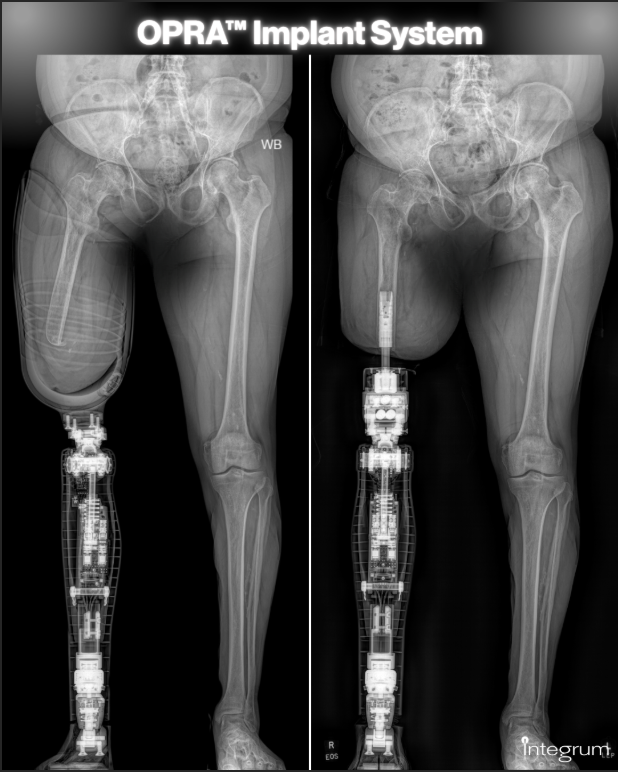
The OPRA™ Implant System is based upon 60+ years of science and clinical data. Rooted in the concept of osseointegration, it works by inserting a specially designed titanium Fixture into the residual bone, allowing the patient to connect their prosthetic leg directly to the skeletal structure. This provides easier attachment, increased prosthesis use, improved mobility, and comfort. 

X-ray showing side-by-side socket prosthesis and OPRA™ Implant System.

While the product has evolved over the years, and has expanded across indications, today’s system consists of three main components:

• An anchoring element (the Fixture) 
• A skin-penetrating device (the Abutment) 
• A securing screw (the Abutment Screw) 

The prosthesis is then directly attached to the external part of the Abutment with an OPRA™ Prosthetic Component. 

Postoperative rehabilitation is standardized with controlled levels of loading. Full weight-bearing with a definitive prosthesis is normally permitted approximately three to six months after installation of the Abutment. 

Once healing is complete, the OPRA™ Axor™ II attaches to the Abutment end that is outside of the skin and acts as a safety connection between the Abutment and the prosthesis. It is designed to prevent damage to the bone-anchored Fixture if it is overloaded. If an overload occurs, the Axor™ II twists the prosthesis to protect the Fixture from damage. The OPRA™ Axor™ II must be installed and serviced by a prosthetist (person who specializes in prostheses). 

The Axor™ II with Guide is the only connection device on the market with two planes of release designed to protect the implant. 

The Axor™ II with Guide is used to connect a user’s bone-anchored OPRA™ Implant System with a full-length prosthesis of their choice. 

The Axor™ II with Guide allows for donning and doffing to be performed without the need for external tools.

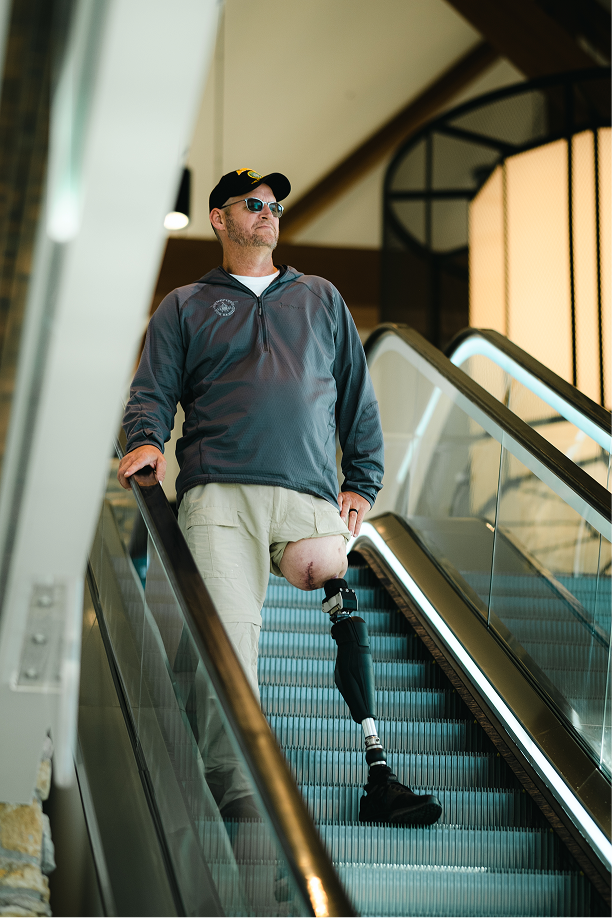
An OPRA™ Implant System patient using an escalator.
Glenn close up.

Glenn Runyon / OPRA™ Ambassador

"It only takes 8 seconds to put on my leg."

Compared to socket prostheses, OPRA™ provides:

Elimination of socket related problems

  • Skin irritations, ulcers and perspiration caused by socket – all eliminated
  • Allows volume fluctuation and weight gain/loss
  • Greater comfort during sitting 

Enhanced proprioception & osseoperception

  • Intuitive awareness of limb positioning in space 
  • Increased sense of feel through the prosthesis 

Increased range of motion and limb strength

  • Wear time and daily steps increase 

Ease of prosthetic donning & doffing

Designed for safety

OPRA™ includes several safety features: The OPRA™ Implant System combines an innovative design philosophy and a precise surgical technique to create a natural, healthy Abutment exit site. This unique approach delivers lasting stability, biological harmony, and a foundation for long-term success. 

The Axor™ II with Guide is the only connection device on the market with two planes of safety release. 

The OPRA™ Implant System is based upon 60+ years of science and clinical data.


Find a center of excellence

Ready to take the leap? Find a Center of Excellence near you and schedule an initial consultation.